[작성자:] admin
Exposure in Washington – Texaco Oil Refinery
Exposure in Washington – Texaco Oil Refinery
The Texaco Oil Refinery opened in Anacortes, Washington in 1958. During this time period asbestos containing products were being widely used. Not surprisingly, at the refinery, asbestos containing products such as protective clothing, insulation and gaskets were used at this refinery, as well as, many other refineries across the country. Many workers at the plant were exposed to asbestos containing products. Now, many years after exposure, workers are experiencing the effects of the exposure in such diseases as mesothelioma and other asbestos caused cancers. The long latency period for the development of these diseases is a characteristic of exposure to asbestos. In addition to holding the manufacturers of asbestos containing products accountable, the refinery owners, can also, be held responsible for their knowledge of the dangers of asbestos.
Exposure in Washington – Foss Launch and Tug Company
Exposure in Washington – Foss Launch and Tug Company
 Foss Launch and Tug Company began in 1889. As the years went on, the company grew. The company, among other work, repaired and refurbished vessels. During much of this work, in the 1950s, 1960s and 1970s, workers were exposed to asbestos containing materials. Asbestos containing materials on boats included insulation, boilers, pipe fittings and gaskets. Unfortunately, exposure to asbestos containing materials can lead to mesothelioma and other asbestos related cancers.
New Blood Test May Help ID Mesothelioma
New Blood Test May Help ID Mesothelioma
Patients who believe that they may have mesothelioma may now have a new way of confirming their hunch via a blood test. US News & World Reports article earlier this month reported on the blood test, along with a lung fluid test. The lung fluid test looks for a protein in plasma called fibulin-3 that indicates whether a person has mesothelioma, often triggered by asbestos exposure.
The article quotes study author, Dr. Harvey Pass, a professor of thoracic oncology at NYU Langone Medical Center in New York City: “In the mesothelioma patients, fibulin-3 was four to five times higher than in asbestos-exposed individuals,”
Results of the study appear in the Oct. 11 issue of the New England Journal of Medicine.
This cancer originates in the lining of the heart, abdomen, chest, and lungs. Mesothelioma is a disease prevalent among individuals who have worked with asbestos or in locations where exposure to asbestos was likely. Smoking increases the risk of mesothelioma.
The deadly material has been used in manufacturing heat resistant materials, often used for construction/plumbing projects. Asbestos has also been used in automotive/truck parts–most notably the brake components, according to the U.S. Environmental Protection Agency.
Dr. Pass recognized that mesothelioma could take years, if not decades, to developer after asbestos exposure. Often, once diagnosed, mesothelioma patients would face grave prognoses of 1 year or less for survival. Symptoms are coughing, chest pain, and shortness of breath.
An earlier detection by use of a “biomarker” may allow for more effective treatment of mesothelioma.
$9+ Million Verdict for Asbestos Injury Victim Thrown Out
$9+ Million Verdict for Asbestos Injury Victim Thrown Out
From 1968 to 2001, Henry Barabin worked at the Crown-Zellerbach paper mill. Until 1984, Mr. Barabin routinely worked around dryer felts containing asbestos, supplied to plant by AstenJohnson Inc. and Scapa Dryer Fabrics Inc. He used the felts at work, and he also took pieces home to use in his garden, according to the Court.

Plaintiff Barabin worked for decades at a paper mill. Not until 2006 did he learn that he had mesolthelioma.
In 2006, Mr. Barabin was diagnosed with mesothelioma cancer.
He and his wife sued the two companies in the Western District of Washington. Initially, U.S. District Judge Robert Lasnik excluded industrial health expert Kenneth Cohen from testifying on behalf of the Barabins. Judge Lasnik had issues with Cohen’s “dubious credentials and his lack of expertise with regard to dryer felts and paper mills.” However, Judge Lasnik later changed his mind and allowed Mr. Cohen to testify.
A jury then ruled for Barabin and awarded $9.3 million in damages. AstenJohnson and Scapa moved for a new trial, arguing that the District Court should have waited to reverse itself after further assessing Cohen’s credentials in a Daubert hearing, named for the 1993 case Daubert v. Merrell Dow Pharm.
The District Court disagreed, but a three-judge appellate panel ruled Friday that the oversight was serious enough to prompt a new trial. For the panel, Judge Johnie Rawlinson wrote the decision, “None of the Daubert factors were considered. Instead, the Court allowed the parties to submit the experts’ unfiltered testimony to the jury.”
“On remand, the District Court dutifully will make a new Daubertdetermination,” she wrote. “If the court finds that the expert testimony is, indeed, reliable, what purpose is served by empaneling a new jury and conducting another lengthy trial the outcome of which likely will be identical to the one already concluded? Mukhtar answers that query by holding that we cannot trust a District Court not to succumb to ‘post-hoc rationalization.’ But we routinely trust district courts to reassess their earlier judgments in matters of more consequence than disputes over money. Regardless, I do not share Mukhtar’s lack of faith in our district courts. Were it not for Mukhtar, I would conditionally vacate the judgment and remand to the district court with instructions to make a new Daubert determination. If the expert testimony is reliable, then the original judgment should be re-entered. If the expert testimony is not reliable, then the court should preside over a new trial.”
Alaska company neglects to tell demolition workers about asbestos
Alaska company neglects to tell demolition workers about asbestos
Alaska co knew about asbestos, but asked employees to move forward with demolition
The names “Copper River Campus” and “Copper River Seafoods” conjure images of pure water running through a pristine natural setting. However, Copper River Campus, the facility and building owner of buildings for Copper River Seafoods was aware of asbestos in its walls, ceilings, floors and elsewhere in the structure that it purchased in 2009 in Anchorage, Alaska.
Despite its awareness, according to U.S. Attorney Karen Loeffler, CSR put its employees in danger by allowing them to be exposed to airborne asbestos fibers, known to cause mesothelioma and asbestosis. Ms. Loeffler stated that the CRS employee, the manager who gave the demolition instructions, did not know about the presence of asbestos. The employee did not recognize the presence of the material either and went ahead with the demolition, hence putting himself in danger of inhaling airborne asbestos fibers, which can cause asbestosis and mesothelioma.
Once the Environmental Protection Agency learned of the activity, they sent an inspector to the property. The inspector determined that “Copper River Campus negligently placed employees of Copper River Seafoods and others in imminent danger of serious bodily injury, as they had no specialized training on asbestos removal, nor were they wearing personal protective equipment.” Anyone involved may have suffered serious illness due to asbestos exposure, the inspector added.
Unfortunately, this is just one of many instances of an entity willfully disregarding the safety and health of its employees, in its failure to disclose and safeguard against exposure to harmful materials such as asbestos.
Boeing Sidesteps Asbestos Claim
Boeing Sidesteps Asbestos Claim
At a Boeing hammer shop, white powder was flaking and falling from overhead pipes. So maintenance workers re-wrapped the overhead pipes to contain the absestos insulation. These workers wore protective clothing that the hammer shop workers called “moon suits.” But those hammer shop workers, including Gary Walston, did not wear any protective clothing or respirators. While the moon suited workers wrapped the pipes, visible dust and debris fell on Gary Walston and his colleagues. To protect their tools from accumulating dust, they covered them with plastic. When Gary asked his supervisor if he could wear protective gear too, he was told “get back to work.”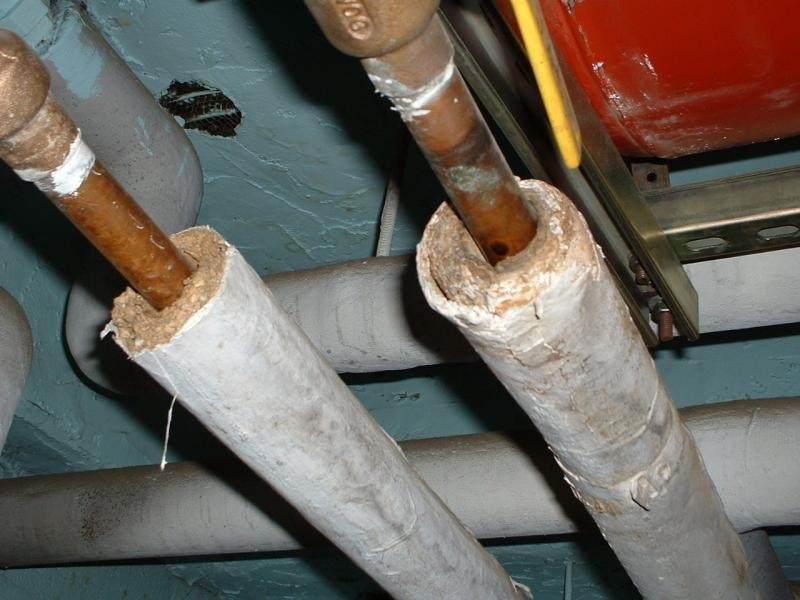
Roughly 25 years later, Gary Walston was diagnosed with mesothelioma. He sued Boeing, his employer, alleging that he contracted mesothelioma as a result of his exposure to asbestos while working at the hammer shop. The trial court denied Boeing’s motion for summary judgment, and Boeing appealed.
Despite the fact Boeing’s previous involvement in workers’ compensation claims with claimants suffering from asbestos-related injuries, Boeing denied that it had any “actual knowledge” that Mr. Walston’s injuries would be “certain” as a result of the visible asbestos in the hammer shop.
Mr. Walston claimed that he presented evidence raising a material factual dispute about whether Boeing had (1) actual knowledge that he was certain to be injured and (2) that Boeing willfully disregarded such knowledge. Mr. Walston argued that he—like the employees in Birklid, Hope, and Baker—was injured as a result of being exposed to a substance at work that his employer knew was certain to injure him.
The three panel appellate court reversed the trial court’s denial of Boeing’s MSJ. Judge Marywave Van Deren wrote that Boeing workers like Mr. Walston “were not immediately or visibly injured by the exposure to asbestos.” “Nor did they complain of injuries caused from their exposure to asbestos. Walston was not diagnosed with an asbestos related disease until 25 years after the ‘moon suit incident’ in the hammer shop.”
What this ruling shows is that asbsestos injury lawyers have a steep hill to climb to educate judges and the larger public about the extreme hazards of asbestos exposure. Simply because someone is not immediately coughing or showing visible injury does not mean that their bodies have already been exposed to dangerous amounts of asbestos. Mesothelioma and other asbestos related injuries can take decades to detect, as illustrated by Gary Walston’s case. If you are ever in a situation such as Mr. Walston, please think about the longterm consequences and do everything you can to educate your employer. Keep a written journal and records of all written correspondence. Hopefully, however, you will not need these in a claim against your employer.
School Under Criminal Investigation for Using Children at Absestos Laden Site
School Under Criminal Investigation for Using Children at Absestos Laden Site
Can you imagine using 13 year old students to help clean up debris at an asbestos contaminated building? That’s what a school in Ohio did, accordingy to a Huffington Post article. A neighbor who lived in a residence by the old YMCA building filmed the volunteers working amidst a cloud of dust.
The site, where volunteers that included young children, used to house a YMCA. As in Washington State, Ohio state law requires removal of asbestos by special contractors. According to Ohio EPA literature, “all facilities are required to complete a thorough asbestos survey before renovation or demolition.” Despite the state’s environmental protection agency’s finding that pipes, floor tiles, ducts, etc. were laden with asbestos, students and adult volunteers were asked to clean up the debris at the site.
13 yr old students were some of the volunteers who helped clean up at an asbestos laden site
After attention was turned to this issue, the school has now indicated that it will use a certified asbestos abatement contractor instead.
What’s in Store for Asbestos Cases?
What’s in Store for Asbestos Cases?
A good indicator of the future of asbestos lawsuits is what have seen so far in the past few years. According to one report, “Mesothelioma Trends in the United States: An Update Based on Surveillance, Epidemiology, and End Results Program Data for 1973 through 2003.” by Bertram Price and Adam Ware, (Am. J. of Epidemiol 2004; 159:107-112), mesothelioma diagnoses are reaching new highs. According to NERA Economic Consulting, there was a 75% increase in the average dollar amount for resolved claims in 2010. That number was more than double than then in 2009 and 2010. A large factor is that there were more malignancies resolved as opposed to non-malignancies. In general, however, the number of new cases remains stable, at about 52,000 new case per year.
Interestingly, there were less dismissed and resolved claims in 2011. This may be because the larger defendants have gone through the bulk of their non-malignant claims.
Why Are Asbestos Cases so Complex?
Why Are Asbestos Cases so Complex?
As most followers of this blog already probably realize, asbestos lawsuits are complex in a number of ways. They typically involve a number of defendants, each of whom may be brought into a case on different theories of

Asbestos cases are notoriously lengthy and complicated
liability as discovery progresses. Then, discovery process grows expensive, especially as expert witnesses are almost always required.
A typical claimant is often exposed to multiple asbestos products. Thus, often it’s difficult to demonstrate the nexus between a defendant and the source of exposure. Taken together, these characteristics of the claims suggest that asbestos lawsuits are unusually difficult to resolve.
Attorneys who specialize in asbestos injury practices have, over time, obtained the requisite knowledge and experience to succeed with such cases. They have learned to develop specific plans that include the usual hurdles in this increasingly specialized area of litigation. In an asbestos injury case, a plaintiff may name anywhere from a handful to a hundreds of entities as defendants. Suing dozens of defendants can predictably result in a large number of cross claims and somewhat redundant pleadings from various parties at the discovery process. An attorney involved in an asbestos claim will usually have to sort through a maze of parties to determine who may be without liability. Such cases are not only time consuming for plaintiffs and defense counsel, but also for the court.
L.A. Court Returns $26.6 Million Verdict to Former Drywaller
L.A. Court Returns $26.6 Million Verdict to Former Drywaller
Last month, a Los Angeles Superior Court jury returned its verdict awarding $26.6 million to Michael Sutherland, a former drywaller, diagnosed with mesothelioma, a cancer caused by asbestos. and his wife Suszi.
As a drywaller in northern San Diego County from 1967, Mike was still attending Madison High School. Then, through 1993, he often took extended surfing trips to Hawaii and Mexico. As a contractor, he made a living for numerous residential and commercial jobs during the construction “boom” in the 1970s. During this period, cancer-causing asbestos was a common ingredient in popular construction products. Such products include joint compound, fire-rated drywall, caulk, stucco, roofing mastic and asbestos cement pipe.

“With all the trades working on top of each other trying to finish one job and move on to the next, it was always dusty,” Mike recalled, “It wasn’t until I became a lead maintenance mechanic at UC San Diego and attended a class on job safety in 2003 that I learned that so many of the materials used on the jobs back then contained asbestos.”
The Sutherlands’ case (LASC case # BC486980) was filed on June 20, 2012. Over 30 defendants were named in the case. They had settled most of the defendants before trial. However, Stucco manufacturer, Highland Stucco and Lime Products, Inc., refused to settle. Thus, Highland was the only defendant at trial, claiming that other companies and even Mr. Sutherland himself were responsible for his exposure to asbestos. Disagreeing with Highland, the jury ultimately found the company responsible for its role in subjecting Mr. Sutherland and other members of the public to its dangerous products.