[작성자:] admin
Elder Abuse & Neglect Law Blog
Elder Abuse & Neglect Law Blog
Industries and Occupations with Higher Risk of Asbestos Exposure
Industries and Occupations with Higher Risk of Asbestos Exposure
Workers in the following industries and occupations are at higher risk of asbestos exposure and resulting illnesses:
- Aerospace and missile production
- Aircraft manufacturing and maintenance
- Asbestos & insulation manufacturing
- Automobile manufacturing, maintenance and repair – especially brake related
- Cement plant workers
- Building engineers
- Building material manufacturing
- Construction & demolition industry:
- Boilermakers
- Carpenters
- Cement worker
- Drywallers
- Electricians
- Engineers & inspectors
- HVAC
- Insulators
- Iron & steel
- Masonry, tile & linoleum layers
- Plasterers
- Plumbers
- Roofers
- Steamfitters
- Welders
- Custodians
- Maritime & shipyard workers:
- Longshoremen
- Merchant marines
- U.S. Navy and Coast Guard personnel
- Packing and gasket manufacturers
- Pipefitters
- Protective clothing and glove manufacturers
- Railroad workers
- Refineries
- Refractory plants
- Rubber industry
- Sheet metal
- Steamfitters
- Warehouse indsutry
In addition, family members of employees in these industries are highly susceptible to asbestos exposure by asbestos being carried on clothing and other items.
Exposure in Washington – Todd Shipyard
Exposure in Washington – Todd Shipyard
 Over the next few weeks, I will share some facts about where many workers over the years were exposed to asbestos in the State of Washington. As you suspect, many were exposed in the shipbuilding and ship repair industry given Washington location off the coast of the Pacific Ocean. Todd shipyard came to Seattlearound 1916. Peak operations occurred during the World War era, throughout the 1960s and 1970s, Todd Shipyard continued it operations building and repairing such vessels as ferry boats, Navy destroyers and frigates and tug boats to name a few. Unfortunately, the shipyard used asbestos extensively in it operations. Many workers were unknowingly exposed to high levels of asbestos. As a result, many of those workers have contracted asbestos related diseases, including mesothelioma and other related cancers.
More on Exposure in Washington Puget Sound Naval Shipyard
More on Exposure in Washington Puget Sound Naval Shipyard
 Puget Sound Naval Shipyard became a Navy Shipyard during World War I. It is located across from Seattle in Bremerton. During World War II the shipyard was quite active. After the war ended, shipyard continued to repair and modernize Naval vessels. Unfortunately, a significant of asbestos containing products were used in the shipyard. Workers at the shipyard have had a high incident of asbestos-related diseases, including mesothelioma. These workers, while helping our country and the community were exposed to these deadly asbestos fibers.
More on Railroad exposure
More on Railroad exposure
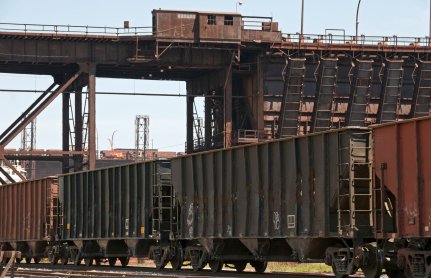 One source of exposure among railroad workers occured in the buildings that were used to repair locomotives and rail cars. I have heard stories from railroad workers about the flakes of white particles – some described them as snowflake like – that would fall on and around them as they worked. What is important is that the amount of asbestos that these workers were exposed to was much greater than what they could see. Asbestos fibers are not visible with the naked eye.
In these railroad buildings, asbestos was used as insulation in the walls, around pipes and in various other building products.
Asbestos causes mesothelioma and other cancers. The tragedy is that the danger of asbestos was known long before railroad workers were exposed to the product. All these railroad workers wanted to do was provide for their families.
Response to More on Railroad exposure
-
-
There is loads of asbestos around.
-
Local Company Fined for Improper Asbestos Removal at Youth Center
Local Company Fined for Improper Asbestos Removal at Youth Center
 Solomon’s Porch youth center in Wenatchee, WA is to serve hundreds of high-risk teens and includes a homeless shelter. However, part of the construction that was under way last year apparently included asbestos removal that violated guidelines. The contractor, Evergreen Asbestos, was fined $25,450 for 14 violations.
The L&I spokesperson, Hector Castro, indicated that this particular contractor should have known better. The agency’s concern focused on the workers’ safety, although Castro was not sure if nonworkers might have been exposed to dangerous material soon after the asbestos removal project.
The company owner of Evergreen Asbsestos maintains that there was no risk to the workers. However, violations cited include that the contractor failed to ensure that “all surfaces were maintained as free of … dusts and waste containing asbestos. One employee was on his hands and knees in no protective equipment or clothing.” Additionally, employees were allowed to wear half face respirators with facial hair, beards, and goatees.
A cavalier attitude toward workers’ safety is what has led to billions of dollars of lawsuits on behalf of those, who suffer or have died from mesothelioma, a deadly disease resulting from asbestos exposure.
3 Responses to Local Company Fined for Improper Asbestos Removal at Youth Center
-
-
Moving Services London says:
Thanks for the blog post. I thought it was awesome!! Appreciated
-

-
-
angelo sam says:
great blog…..
thanks for sharing your experience about Asbestos Removal….
Asbestos testing Montreal
-

-
-
Asbestos removal nyc says:
Hi there,
I am sure I can rely on this people for any help related to asbestos removal
Thanks,
Gerald
-

State Supreme Court Halves Jury Verdict in Asbestos Case
State Supreme Court Halves Jury Verdict in Asbestos Case
Last year, a jury found in favor of a U.S. Navy sailor’s family awarding the family almost $6 million. However, a few weeks ago the Virginia State Supreme Court cut the jury’s verdict in half to $2.83 million. It held that the jury should not have been allowed to award pain and suffering damages.
Robert Hardick was a former Navy petty officer and had been a shipfitter and machine repairperson for Navy ships. Due to working conditions on Navy ships that included breathing asbestos fibers for a couple decades, Mr. Hardick died after suffering from mesothelioma at 69 years old.
The VA Supreme Court cited the U.S. Supreme Court, where it stated that a “seaman” is a broadly used maritime term. One only needed to “contribute to the function of the vessel or to the accomplishment of its mission.” Thus, the VA Supreme Court held that the trial court erred by allowing the jury to award Hardick’s family nonpecuniary damages for the wrongful death of Mr. Hardick.
Defendant John Crane Inc. expressed approval of this decision to vacate the pain and suffering and loss of society awards.
5 Responses to State Supreme Court Halves Jury Verdict in Asbestos Case
-
-
Posted by My Industrial Injury Claims.com says:
What a information of un-ambiguity and preserveness of precious know-how concerning unexpected emotions.
-

-
-
Posted by My Industrial Injury Claims.com says:
Quality articles is the crucial to attract the viewers to visit the website, thats what this website is
providing.
-

-
-
Northern Insulation says:
This figure is amazing. It is true that this has halved now.
-

-
-
Posted by My Industrial Injury Claims.com says:
wonderful issues altogether, you just won
a new reader. What would you suggest about your publish that you just made a few days in the past?
Any positive?
-

-
-
national collection agencies says:
Hey there! Someone in my Myspace group shared this website with us so I came to check it out.
I’m definitely enjoying the information. I’m book-marking and will be tweeting this to my followers! Superb blog and brilliant style and design.
-

How can asbestos enter and leave my body?
How can asbestos enter and leave my body?
If you breathe asbestos fibers into your lungs, some of the fibers will be deposited in the air passages and on the cells that make up your lungs. Most fibers are removed from your lungs by being carried away or coughed up in a layer of mucus to the throat, where they are swallowed into the stomach. This usually takes place within a few hours. Fibers that are deposited in the deepest parts of the lung are removed more slowly. In fact, some fibers may move through your lungs and can remain in place for many years and may never be removed from your body. Amphibole asbestos fibers are retained in the lung longer than chrysotile asbestos fibers.
If you swallow asbestos fibers (either those present in water or those that are moved to your throat from your lungs), nearly all of the fibers pass along your intestines within a few days and are excreted in the feces. A small number of fibers may penetrate into cells that line your stomach or intestines, and a few penetrate all the way through and get into your blood. Some of these become trapped in other tissues, and some are removed in your urine.
If you get asbestos fibers on your skin, very few of these fibers, if any, pass through the skin into your body.
This information is provided courtesy of the ATSDR Information Center.
What happens to asbestos when it enters the environment?
What happens to asbestos when it enters the environment?
Asbestos fibers do not evaporate into air or dissolve in water. However, pieces of fibers can enter the air and water from the weathering of natural deposits and the wearing down of manufactured asbestos products. Small diameter fibers and fiber-containing particles may remain suspended in the air for a long time and be carried long distances by wind or water currents before settling. Larger diameter fibers and particles tend to settle more quickly.
Asbestos fibers are not able to move through soil. They are generally not broken down to other compounds in the environment and will remain virtually unchanged over long periods. However, the most common form of asbestos, chrysotile, may have some minor mineral loss in acidic environments. Asbestos fibers may break into shorter pieces or separate into a larger number of individual fibers as a result of physical processes.
When asbestos fibers are breathed in, they may get trapped in the lungs. Levels of fibers in lung tissue build up over time, but some fibers, particularly chrysotile fibers, can be removed from or degraded in the lung with time.
This information is provided courtesy of the ATSDR Information Center.
Causes of Asbestos-Related Diseases
Causes of Asbestos-Related Diseases
 Many folks ask what causes Asbestos-related diseases. Mesothelioma, one of the most serious asbestos-related diseases, and other related cancers are caused by repeated inhalation of asbestos fibers. The fibers are not visible and testing to determine whether or not the deadly microscopic fibers are in the air requires special equipment. Asbestos was used in insulation, roofing, floor tile, siding brake linings and other fire retardant materials. Worker using asbestos containing materials or around those using asbestos containing materials had no knowledge of its dangers. These workers got up each and every day to provide for their families, all the while, exposing themselves to deadly microscopic fibers. Those that have suffered or are suffering from Asbestos-related diseases are entitled to accountability from those who knowingly caused their exposure.

asbestos management says: