[작성자:] admin
Intro
Intro
Welcome
I am excited that my blog has been updated and refreshed. Many believe that asbestos exposure and the diseases it causes are a thing of the past. While it is true that laws and regulations enacted in the early 1970s have prevented exposure to asbestos for the most part, what we are seeing is a greater number of those developing the most serious diseases. These diseases include mesothelioma and lung cancer. There are also other forms of cancer that are caused by asbestos. The reason that we are seeing these diseases so long after the exposure is that there is a very long latency period between exposure and disease development.
What we are seeing is that workers who were exposed in shipyards, in factories, at construction sites, in the automobile industry and in other environments in the 1940s,1950s, 1960s and 1970s are coming down with the worst diseases caused by asbestos.
Given the lengthen of time that the medical communities across the country have been dealing with asbestos disease, treatments have improved. Now, at this time there is no known cure for mesothelioma, but, various treatment issues have improved the longevity in which those with mesothelioma are able to live. Treatments have also improved the quality of life for those with asbestos caused cancers.
Blogroll
Asbestos Occupations
Asbestos Occupations
Why Should Anyone Seek Justice as an Asbestos Victim?
The Wall Street Journal recently featured a fascinating story about an asbestos victim. Bill McQueen, unlike other mesothelioma patients that we often hear about, was not a shipbuilder or construction worker. He was an Air 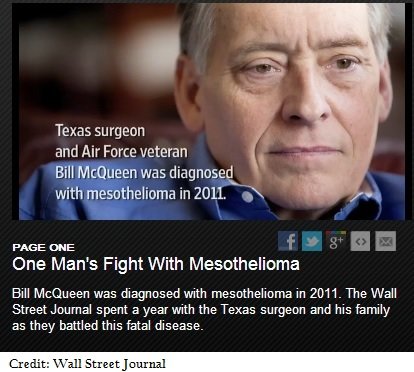 Force surgeon. Dr. McQueen had sought medical care, when his chest pain persisted. He had thought it was perhaps a flareup of an old rib fracture. However, is doctor ultimately told him that he was suffering from mesothelioma, an incurable and fatal cancer that was encasing his left lung.
Dr. McQueen represents a different type of plaintiff in the asbestos litigation. Rather than targeting one or two defendants, asbestos claims are now involving dozens of corporate defendants. Research based on asbestos filing in Philadelphia reveals that almost 50% of the mesothelioma claims from 2006 through 2010 related plaintiffs’ exposure due to do-it-yourself type of construction or auto mechanic projects. In contrast, those type of plaintiffs were only about 3% of similar claims in the prior decade (1991- 2001).
The mesothelioma was so far advanced for Dr. McQueen, when his wife began to search for an asbestos-injury attorney. In 2011, waking up from a coma, Dr. McQueen found an attorney at his bedside. The process of understanding how Dr. McQueen was exposed to asbestos began with digging through photos of an old family farm. Some of those photos showed rusty paint cans, cement bags, and insulation, all of which Dr. McQueen had worked with decades before. As a result, Dr. McQueen and his wife named over two dozen corporate defendants.
What is also interesting to see from this WSJ article is the comments. Some found the McQueens’ search for justice “disgusting,” while others viewed the claim as a sort of fishing expedition. A scant few seemed to recognize that this was the family’s attempt to hold negligent companies accountable.
Dr. McQueen passed away in his home this past March. Trial is set for this November, while several defendants have settled with the family already.
L.A. Court Returns $26.6 Million Verdict to Former Drywaller
Last month, a Los Angeles Superior Court jury returned its verdict awarding $26.6 million to Michael Sutherland, a former drywaller, diagnosed with mesothelioma, a cancer caused by asbestos. and his wife Suszi.
As a drywaller in northern San Diego County from 1967, Mike was still attending Madison High School. Then, through 1993, he often took extended surfing trips to Hawaii and Mexico. As a contractor, he made a living for numerous residential and commercial jobs during the construction “boom” in the 1970s. During this period, cancer-causing asbestos was a common ingredient in popular construction products. Such products include joint compound, fire-rated drywall, caulk, stucco, roofing mastic and asbestos cement pipe.

“With all the trades working on top of each other trying to finish one job and move on to the next, it was always dusty,” Mike recalled, “It wasn’t until I became a lead maintenance mechanic at UC San Diego and attended a class on job safety in 2003 that I learned that so many of the materials used on the jobs back then contained asbestos.”
The Sutherlands’ case (LASC case # BC486980) was filed on June 20, 2012. Over 30 defendants were named in the case. They had settled most of the defendants before trial. However, Stucco manufacturer, Highland Stucco and Lime Products, Inc., refused to settle. Thus, Highland was the only defendant at trial, claiming that other companies and even Mr. Sutherland himself were responsible for his exposure to asbestos. Disagreeing with Highland, the jury ultimately found the company responsible for its role in subjecting Mr. Sutherland and other members of the public to its dangerous products.
Boeing Sidesteps Asbestos Claim
At a Boeing hammer shop, white powder was flaking and falling from overhead pipes. So maintenance workers re-wrapped the overhead pipes to contain the absestos insulation. These workers wore protective clothing that the hammer shop workers called “moon suits.” But those hammer shop workers, including Gary Walston, did not wear any protective clothing or respirators. While the moon suited workers wrapped the pipes, visible dust and debris fell on Gary Walston and his colleagues. To protect their tools from accumulating dust, they covered them with plastic. When Gary asked his supervisor if he could wear protective gear too, he was told “get back to work.”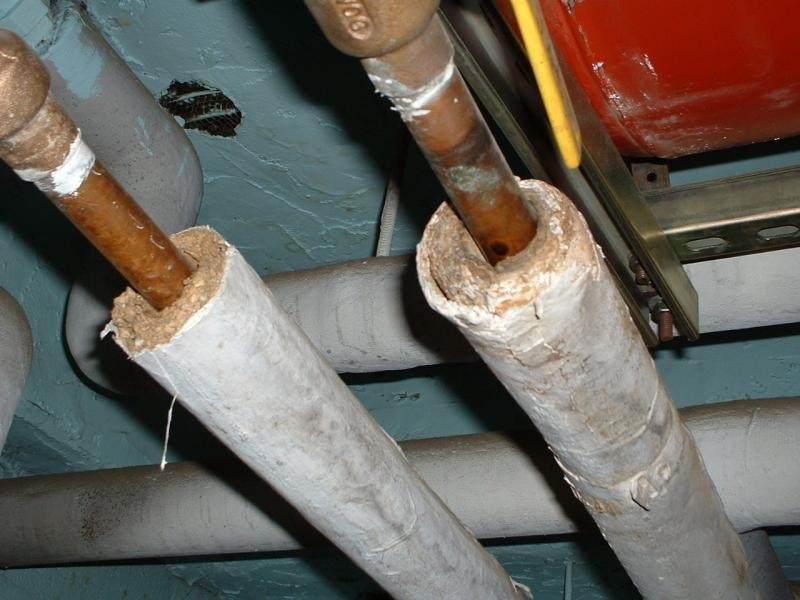
Roughly 25 years later, Gary Walston was diagnosed with mesothelioma. He sued Boeing, his employer, alleging that he contracted mesothelioma as a result of his exposure to asbestos while working at the hammer shop. The trial court denied Boeing’s motion for summary judgment, and Boeing appealed.
Despite the fact Boeing’s previous involvement in workers’ compensation claims with claimants suffering from asbestos-related injuries, Boeing denied that it had any “actual knowledge” that Mr. Walston’s injuries would be “certain” as a result of the visible asbestos in the hammer shop.
Mr. Walston claimed that he presented evidence raising a material factual dispute about whether Boeing had (1) actual knowledge that he was certain to be injured and (2) that Boeing willfully disregarded such knowledge. Mr. Walston argued that he—like the employees in Birklid, Hope, and Baker—was injured as a result of being exposed to a substance at work that his employer knew was certain to injure him.
The three panel appellate court reversed the trial court’s denial of Boeing’s MSJ. Judge Marywave Van Deren wrote that Boeing workers like Mr. Walston “were not immediately or visibly injured by the exposure to asbestos.” “Nor did they complain of injuries caused from their exposure to asbestos. Walston was not diagnosed with an asbestos related disease until 25 years after the ‘moon suit incident’ in the hammer shop.”
What this ruling shows is that asbsestos injury lawyers have a steep hill to climb to educate judges and the larger public about the extreme hazards of asbestos exposure. Simply because someone is not immediately coughing or showing visible injury does not mean that their bodies have already been exposed to dangerous amounts of asbestos. Mesothelioma and other asbestos related injuries can take decades to detect, as illustrated by Gary Walston’s case. If you are ever in a situation such as Mr. Walston, please think about the longterm consequences and do everything you can to educate your employer. Keep a written journal and records of all written correspondence. Hopefully, however, you will not need these in a claim against your employer.
State Supreme Court Halves Jury Verdict in Asbestos Case
Last year, a jury found in favor of a U.S. Navy sailor’s family awarding the family almost $6 million. However, a few weeks ago the Virginia State Supreme Court cut the jury’s verdict in half to $2.83 million. It held that the jury should not have been allowed to award pain and suffering damages.
Robert Hardick was a former Navy petty officer and had been a shipfitter and machine repairperson for Navy ships. Due to working conditions on Navy ships that included breathing asbestos fibers for a couple decades, Mr. Hardick died after suffering from mesothelioma at 69 years old.
The VA Supreme Court cited the U.S. Supreme Court, where it stated that a “seaman” is a broadly used maritime term. One only needed to “contribute to the function of the vessel or to the accomplishment of its mission.” Thus, the VA Supreme Court held that the trial court erred by allowing the jury to award Hardick’s family nonpecuniary damages for the wrongful death of Mr. Hardick.
Defendant John Crane Inc. expressed approval of this decision to vacate the pain and suffering and loss of society awards.
Local Company Fined for Improper Asbestos Removal at Youth Center
 Solomon’s Porch youth center in Wenatchee, WA is to serve hundreds of high-risk teens and includes a homeless shelter. However, part of the construction that was under way last year apparently included asbestos removal that violated guidelines. The contractor, Evergreen Asbestos, was fined $25,450 for 14 violations.
The L&I spokesperson, Hector Castro, indicated that this particular contractor should have known better. The agency’s concern focused on the workers’ safety, although Castro was not sure if nonworkers might have been exposed to dangerous material soon after the asbestos removal project.
The company owner of Evergreen Asbsestos maintains that there was no risk to the workers. However, violations cited include that the contractor failed to ensure that “all surfaces were maintained as free of … dusts and waste containing asbestos. One employee was on his hands and knees in no protective equipment or clothing.” Additionally, employees were allowed to wear half face respirators with facial hair, beards, and goatees.
A cavalier attitude toward workers’ safety is what has led to billions of dollars of lawsuits on behalf of those, who suffer or have died from mesothelioma, a deadly disease resulting from asbestos exposure.
More on Railroad exposure
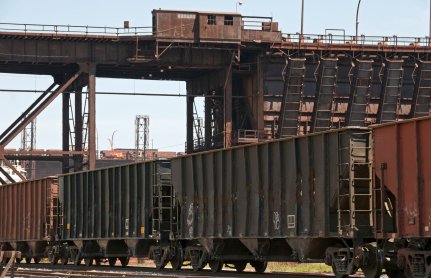 One source of exposure among railroad workers occured in the buildings that were used to repair locomotives and rail cars. I have heard stories from railroad workers about the flakes of white particles – some described them as snowflake like – that would fall on and around them as they worked. What is important is that the amount of asbestos that these workers were exposed to was much greater than what they could see. Asbestos fibers are not visible with the naked eye.
In these railroad buildings, asbestos was used as insulation in the walls, around pipes and in various other building products.
Asbestos causes mesothelioma and other cancers. The tragedy is that the danger of asbestos was known long before railroad workers were exposed to the product. All these railroad workers wanted to do was provide for their families.
More on Exposure in Washington Puget Sound Naval Shipyard
 Puget Sound Naval Shipyard became a Navy Shipyard during World War I. It is located across from Seattle in Bremerton. During World War II the shipyard was quite active. After the war ended, shipyard continued to repair and modernize Naval vessels. Unfortunately, a significant of asbestos containing products were used in the shipyard. Workers at the shipyard have had a high incident of asbestos-related diseases, including mesothelioma. These workers, while helping our country and the community were exposed to these deadly asbestos fibers.
Exposure in Washington – Todd Shipyard
 Over the next few weeks, I will share some facts about where many workers over the years were exposed to asbestos in the State of Washington. As you suspect, many were exposed in the shipbuilding and ship repair industry given Washington location off the coast of the Pacific Ocean. Todd shipyard came to Seattlearound 1916. Peak operations occurred during the World War era, throughout the 1960s and 1970s, Todd Shipyard continued it operations building and repairing such vessels as ferry boats, Navy destroyers and frigates and tug boats to name a few. Unfortunately, the shipyard used asbestos extensively in it operations. Many workers were unknowingly exposed to high levels of asbestos. As a result, many of those workers have contracted asbestos related diseases, including mesothelioma and other related cancers.
Industries and Occupations with Higher Risk of Asbestos Exposure
Workers in the following industries and occupations are at higher risk of asbestos exposure and resulting illnesses:
- Aerospace and missile production
- Aircraft manufacturing and maintenance
- Asbestos & insulation manufacturing
- Automobile manufacturing, maintenance and repair – especially brake related
- Cement plant workers
- Building engineers
- Building material manufacturing
- Construction & demolition industry:
- Boilermakers
- Carpenters
- Cement worker
- Drywallers
- Electricians
- Engineers & inspectors
- HVAC
- Insulators
- Iron & steel
- Masonry, tile & linoleum layers
- Plasterers
- Plumbers
- Roofers
- Steamfitters
- Welders
- Custodians
- Maritime & shipyard workers:
- Longshoremen
- Merchant marines
- U.S. Navy and Coast Guard personnel
- Packing and gasket manufacturers
- Pipefitters
- Protective clothing and glove manufacturers
- Railroad workers
- Refineries
- Refractory plants
- Rubber industry
- Sheet metal
- Steamfitters
- Warehouse indsutry
In addition, family members of employees in these industries are highly susceptible to asbestos exposure by asbestos being carried on clothing and other items.
Asbestos FAQ’s
Asbestos FAQ’s
EPA Slaps a Fine on DOE Contractor
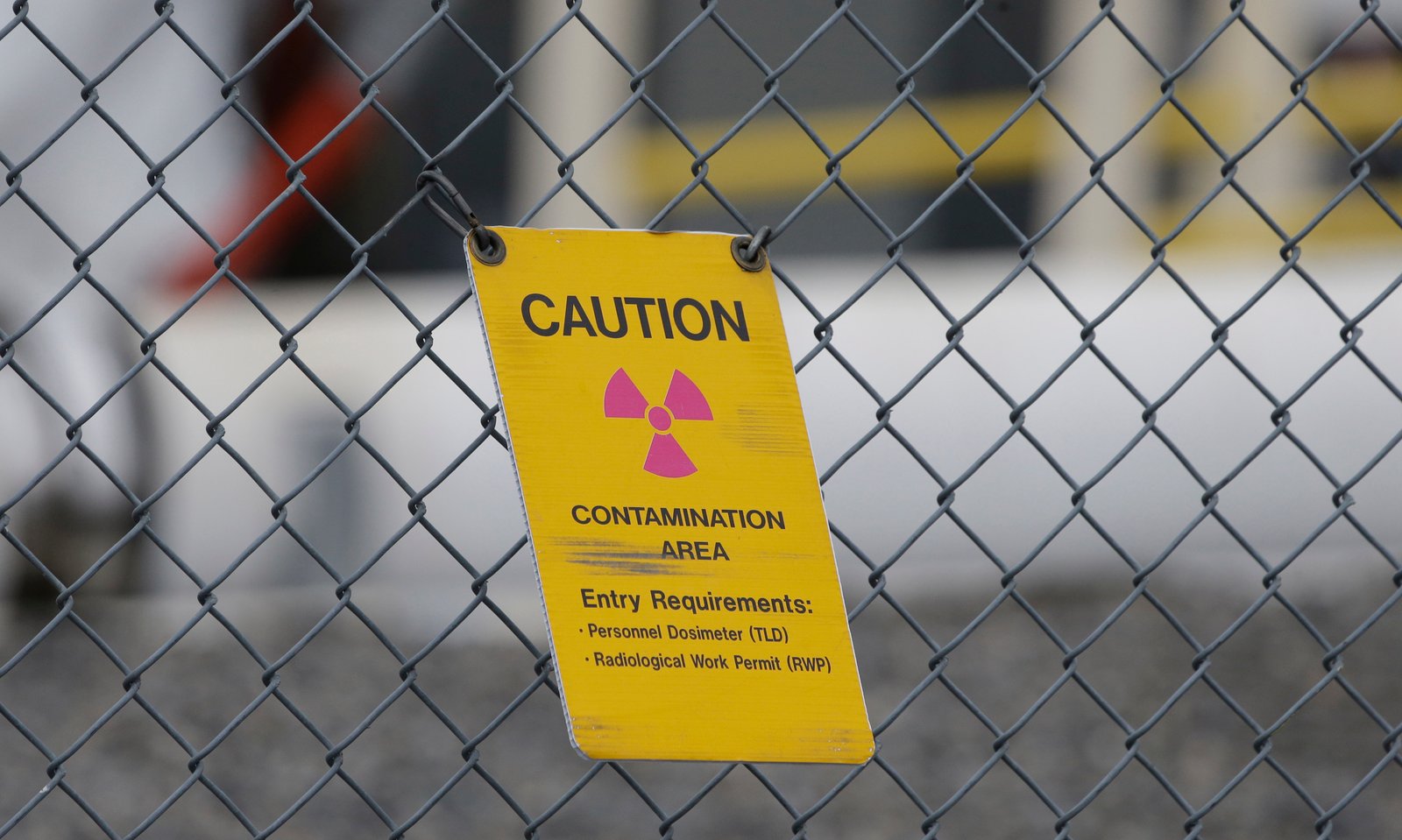
The Department of Energy, which oversees the Hanford Nuclear cleanup in Eastern Washington, got slapped with a $115,000 fine for violations in its asbestos disposal. The U.S. Environmental Protection Agency (EPA) announced earlier this week that its inspectors at the Hanford Nuclear Reservation found improperly managed asbestos in 19 of 22 samples taken at demolition sites.
Based on samples taken at six demolition areas, the EPA said waste containing asbestos was improperly disposed at a Hanford waste facility and there may be as many as 35 more sites where asbestos has, or is suspected to have been, released to the soil.
According to an NPR report by Anna King
EPA fines DOE for improper asbestos removal.
the alleged violations occurred during building demolitions in 2009 and 2010 when federal stimulus money sped up deconstruction projects.
Dennis Faulk, a manager with the EPA, says the federal contractor failed to document and label truck shipments of asbestos debris.
The Hanford cleanup which includes the demolition of hundreds of buildings at the site, which processed materials for construction of nuclear weapons for World War II and the Cold War.
Why Should Anyone Seek Justice as an Asbestos Victim?
The Wall Street Journal recently featured a fascinating story about an asbestos victim. Bill McQueen, unlike other mesothelioma patients that we often hear about, was not a shipbuilder or construction worker. He was an Air Force surgeon. Dr. McQueen had sought medical care, when his chest pain persisted. He had thought it was perhaps a flareup of an old rib fracture. However, is doctor ultimately told him that he was suffering from mesothelioma, an incurable and fatal cancer that was encasing his left lung.
Dr. McQueen represents a different type of plaintiff in the asbestos litigation. Rather than targeting one or two defendants, asbestos claims are now involving dozens of corporate defendants. Research based on asbestos filing in Philadelphia reveals that almost 50% of the mesothelioma claims from 2006 through 2010 related plaintiffs’ exposure due to do-it-yourself type of construction or auto mechanic projects. In contrast, those type of plaintiffs were only about 3% of similar claims in the prior decade (1991- 2001).
The mesothelioma was so far advanced for Dr. McQueen, when his wife began to search for an asbestos-injury attorney. In 2011, waking up from a coma, Dr. McQueen found an attorney at his bedside. The process of understanding how Dr. McQueen was exposed to asbestos began with digging through photos of an old family farm. Some of those photos showed rusty paint cans, cement bags, and insulation, all of which Dr. McQueen had worked with decades before. As a result, Dr. McQueen and his wife named over two dozen corporate defendants.
What is also interesting to see from this WSJ article is the comments. Some found the McQueens’ search for justice “disgusting,” while others viewed the claim as a sort of fishing expedition. A scant few seemed to recognize that this was the family’s attempt to hold negligent companies accountable.
Dr. McQueen passed away in his home this past March. Trial is set for this November, while several defendants have settled with the family already.
L.A. Court Returns $26.6 Million Verdict to Former Drywaller
Last month, a Los Angeles Superior Court jury returned its verdict awarding $26.6 million to Michael Sutherland, a former drywaller, diagnosed with mesothelioma, a cancer caused by asbestos. and his wife Suszi.
As a drywaller in northern San Diego County from 1967, Mike was still attending Madison High School. Then, through 1993, he often took extended surfing trips to Hawaii and Mexico. As a contractor, he made a living for numerous residential and commercial jobs during the construction “boom” in the 1970s. During this period, cancer-causing asbestos was a common ingredient in popular construction products. Such products include joint compound, fire-rated drywall, caulk, stucco, roofing mastic and asbestos cement pipe.
“With all the trades working on top of each other trying to finish one job and move on to the next, it was always dusty,” Mike recalled, “It wasn’t until I became a lead maintenance mechanic at UC San Diego and attended a class on job safety in 2003 that I learned that so many of the materials used on the jobs back then contained asbestos.”
The Sutherlands’ case (LASC case # BC486980) was filed on June 20, 2012. Over 30 defendants were named in the case. They had settled most of the defendants before trial. However, Stucco manufacturer, Highland Stucco and Lime Products, Inc., refused to settle. Thus, Highland was the only defendant at trial, claiming that other companies and even Mr. Sutherland himself were responsible for his exposure to asbestos. Disagreeing with Highland, the jury ultimately found the company responsible for its role in subjecting Mr. Sutherland and other members of the public to its dangerous products.
Why Are Asbestos Cases so Complex?
As most followers of this blog already probably realize, asbestos lawsuits are complex in a number of ways. They typically involve a number of defendants, each of whom may be brought into a case on different theories of

Asbestos cases are notoriously lengthy and complicated
liability as discovery progresses. Then, discovery process grows expensive, especially as expert witnesses are almost always required.
A typical claimant is often exposed to multiple asbestos products. Thus, often it’s difficult to demonstrate the nexus between a defendant and the source of exposure. Taken together, these characteristics of the claims suggest that asbestos lawsuits are unusually difficult to resolve.
Attorneys who specialize in asbestos injury practices have, over time, obtained the requisite knowledge and experience to succeed with such cases. They have learned to develop specific plans that include the usual hurdles in this increasingly specialized area of litigation. In an asbestos injury case, a plaintiff may name anywhere from a handful to a hundreds of entities as defendants. Suing dozens of defendants can predictably result in a large number of cross claims and somewhat redundant pleadings from various parties at the discovery process. An attorney involved in an asbestos claim will usually have to sort through a maze of parties to determine who may be without liability. Such cases are not only time consuming for plaintiffs and defense counsel, but also for the court.
New Blood Test May Help ID Mesothelioma
Patients who believe that they may have mesothelioma may now have a new way of confirming their hunch via a blood test. US News & World Reports article earlier this month reported on the blood test, along with a lung fluid test. The lung fluid test looks for a protein in plasma called fibulin-3 that indicates whether a person has mesothelioma, often triggered by asbestos exposure.
The article quotes study author, Dr. Harvey Pass, a professor of thoracic oncology at NYU Langone Medical Center in New York City: “In the mesothelioma patients, fibulin-3 was four to five times higher than in asbestos-exposed individuals,”
Results of the study appear in the Oct. 11 issue of the New England Journal of Medicine.
This cancer originates in the lining of the heart, abdomen, chest, and lungs. Mesothelioma is a disease prevalent among individuals who have worked with asbestos or in locations where exposure to asbestos was likely. Smoking increases the risk of mesothelioma.
The deadly material has been used in manufacturing heat resistant materials, often used for construction/plumbing projects. Asbestos has also been used in automotive/truck parts–most notably the brake components, according to the U.S. Environmental Protection Agency.
Dr. Pass recognized that mesothelioma could take years, if not decades, to developer after asbestos exposure. Often, once diagnosed, mesothelioma patients would face grave prognoses of 1 year or less for survival. Symptoms are coughing, chest pain, and shortness of breath.
An earlier detection by use of a “biomarker” may allow for more effective treatment of mesothelioma.
Exposure in Washington – Foss Launch and Tug Company
 Foss Launch and Tug Company began in 1889. As the years went on, the company grew. The company, among other work, repaired and refurbished vessels. During much of this work, in the 1950s, 1960s and 1970s, workers were exposed to asbestos containing materials. Asbestos containing materials on boats included insulation, boilers, pipe fittings and gaskets. Unfortunately, exposure to asbestos containing materials can lead to mesothelioma and other asbestos related cancers.
Exposure in Washington – Texaco Oil Refinery
The Texaco Oil Refinery opened in Anacortes, Washington in 1958. During this time period asbestos containing products were being widely used. Not surprisingly, at the refinery, asbestos containing products such as protective clothing, insulation and gaskets were used at this refinery, as well as, many other refineries across the country. Many workers at the plant were exposed to asbestos containing products. Now, many years after exposure, workers are experiencing the effects of the exposure in such diseases as mesothelioma and other asbestos caused cancers. The long latency period for the development of these diseases is a characteristic of exposure to asbestos. In addition to holding the manufacturers of asbestos containing products accountable, the refinery owners, can also, be held responsible for their knowledge of the dangers of asbestos.
Causes of Asbestos-Related Diseases
Many folks ask what causes Asbestos-related diseases. Mesothelioma, one of the most serious asbestos-related diseases, and other related cancers are caused by repeated inhalation of asbestos fibers. The fibers are not visible and testing to determine whether or not the deadly microscopic fibers are in the air requires special equipment. Asbestos was used in insulation, roofing, floor tile, siding brake linings and other fire retardant materials. Worker using asbestos containing materials or around those using asbestos containing materials had no knowledge of its dangers. These workers got up each and every day to provide for their families, all the while, exposing themselves to deadly microscopic fibers. Those that have suffered or are suffering from Asbestos-related diseases are entitled to accountability from those who knowingly caused their exposure.
What happens to asbestos when it enters the environment?
Asbestos fibers do not evaporate into air or dissolve in water. However, pieces of fibers can enter the air and water from the weathering of natural deposits and the wearing down of manufactured asbestos products. Small diameter fibers and fiber-containing particles may remain suspended in the air for a long time and be carried long distances by wind or water currents before settling. Larger diameter fibers and particles tend to settle more quickly.
How can asbestos enter and leave my body?
If you breathe asbestos fibers into your lungs, some of the fibers will be deposited in the air passages and on the cells that make up your lungs. Most fibers are removed from your lungs by being carried away or coughed up in a layer of mucus to the throat, where they are swallowed into the stomach. This usually takes place within a few hours. Fibers that are deposited in the deepest parts of the lung are removed more slowly. In fact, some fibers may move through your lungs and can remain in place for many years and may never be removed from your body. Amphibole asbestos fibers are retained in the lung longer than chrysotile asbestos fibers.
Hello world!
Welcome to WordPress. This is your first post. Edit or delete it, then start writing!